



Today, Apple is widely cited as a masterclass in branding, storytelling, and public relations. However, in its earliest years, Apple struggled to clearly communicate its value. The company had breakthrough technology, but its messaging, media outreach, and understanding of its audience were misaligned. This gap between innovation and perception delayed Apple’s mass adoption and offers a valuable lesson in the strategic importance of PR.
Apple was founded in 1976 by Steve Jobs and Steve Wozniak, during a period when personal computing itself was an undefined concept. The company’s first product, the Apple I, was not marketed as a complete consumer solution. It was essentially a circuit board aimed at hobbyists, requiring buyers to assemble key components themselves.

According to historical records, Apple produced roughly 200 Apple I units, most of which were sold through niche computer stores. While this demonstrated early demand, it also highlighted Apple’s initial limitation: the product spoke only to technically savvy users. Broader audiences struggled to understand what the machine was for, or why they needed it.
From a PR standpoint, Apple’s value proposition was implicit rather than explained. The company relied on word of mouth within technical communities, such as the Homebrew Computer Club, rather than crafting a narrative that could resonate with families, schools, or small businesses.
A bare circuit board does not signal simplicity or trust. In a new and intimidating category like personal computing, visual cues matter. Apple’s early products looked experimental, reinforcing the perception that computers were tools for engineers, not everyday users.
Apple’s early traction came from hobbyist circles. While these communities helped validate the technology, they also boxed the brand into a niche. There was no clear articulation of how the product could fit into daily life, education, or work.
In its first phase, Apple lacked a defined PR strategy. Media engagement, messaging discipline, and brand positioning were secondary to product development. This approach limited Apple’s ability to control perception at a time when public understanding of technology was fragile.
The shift began when Apple recognised that perception needed to be engineered just as carefully as hardware. A key influence was Silicon Valley marketing strategist Regis McKenna, who advised Apple on branding, media engagement, and narrative clarity.
McKenna’s early notes, later published by Fast Company, show how Apple began deliberately considering how journalists, investors, and consumers would interpret the company’s story. This marked the transition from informal promotion to structured PR.
In 1977, Apple replaced its complex original logo with the now-iconic bitten apple, designed by Rob Janoff. This was not a cosmetic decision. It was a strategic move to make the brand appear friendly, modern, and accessible. “I designed it with a bite for scale, so people get that it was an apple, not a cherry,” Janoff has said
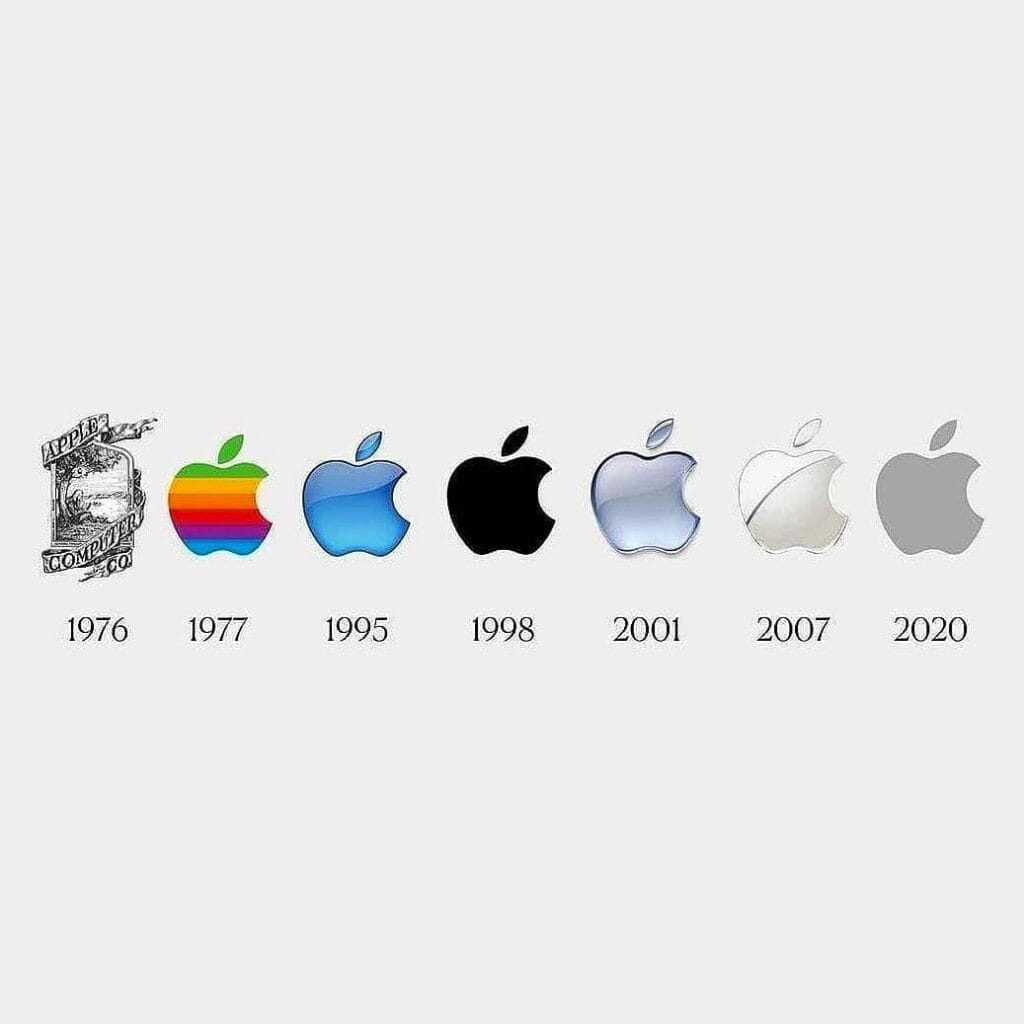
Design publications and interviews later confirmed that this redesign helped Apple distance itself from the “tech hobbyist” image and move closer to mainstream consumers. The role of marketing philosophy
Another important development was Apple’s early marketing framework, authored by Mike Markkula. His philosophy emphasised empathy, focus, and “impute”, the idea that customers judge a product based on the signals a brand sends.
This document, now archived in the Steve Jobs Archive, effectively laid the foundation for Apple’s PR mindset, treating storytelling, presentation, and trust as business assets, not accessories.
The results of Apple’s PR and positioning reset were measurable. According to historical business records and reporting, Apple’s revenue grew rapidly once the Apple II was positioned as a complete, user-friendly product with a clear narrative.
Apple reportedly generated approximately $775,000 in revenue in 1977. By 1980, revenues had grown to around $117 million, an exponential increase over just three years.
This growth coincided with improved messaging, stronger media relationships, and clearer articulation of how Apple’s products fit into everyday life.
Apple’s early years demonstrate a critical truth: innovation alone does not communicate value. In emerging categories, audiences need help understanding relevance, trustworthiness, and usability.
Apple initially assumed that technical excellence would speak for itself. It did not. Growth accelerated only when the company invested in structured PR, coherent storytelling, and visual identity as strategic tools.
For founders and communications leaders today, Apple’s story reinforces the importance of building narrative clarity early. PR is not about visibility alone. It is about meaning, and meaning is what ultimately scales innovation.
Apple’s history proves that innovation alone is not enough. You need a narrative that resonates with the media and the market. If you are a business in Delhi/NCR or anywhere in India looking to scale, don’t wait for your chips to “pop out” before you think about PR.
10 Biggest Apple Fails of All Time. This video provides a visual deep dive into Apple’s historical blunders, including the Apple III and Lisa, illustrating how even revolutionary ideas can fail without proper market execution and communication.
Let’s turn your technical excellence into a market-leading story.
Would you like us to conduct a free PR audit of your current website and brand positioning?




Leave A Reply Now