



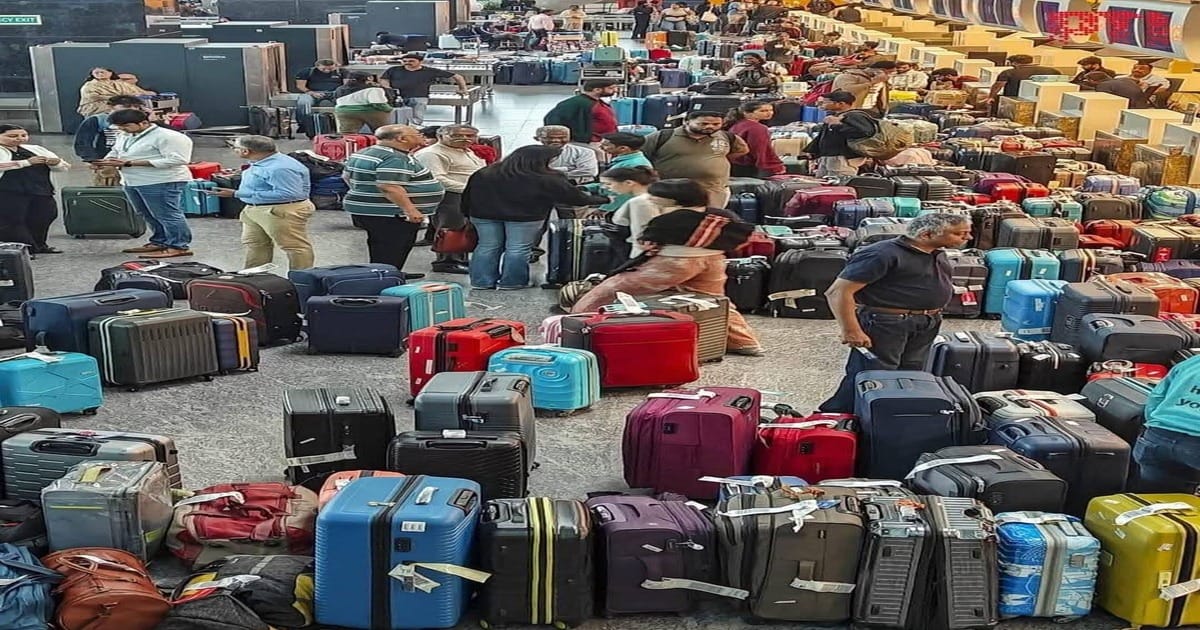
In early December 2025, India woke up to scenes that looked like a disaster movie: airport terminals packed with angry passengers, long queues at help desks, luggage piled up in corners, and “IndiGo cancelled” flashing across display boards in city after city.
What started as a scheduling issue around new pilot rest rules quickly escalated into one of the worst aviation disruptions in India’s history. IndiGo, the country’s largest airline by market share, cancelled thousands of flights in a matter of days, stranding lakhs of passengers and triggering a full-blown corporate and political crisis.
According to the Ministry of Civil Aviation, IndiGo cancelled and refunded 5,86,705 PNRs between 1 and 7 December 2025, worth about ₹569.65 crore. Between 21 November and 7 December, total cancelled and refunded PNRs rose to 9,55,591, with refunds touching ₹827 crore. Of around 9,000 delayed bags, only half had been delivered by 8 December.
By 8 December, news reports and live blogs estimated that over 3,400 to 4,000 flights had been cancelled, affecting several lakh passengers across the network, from Delhi and Mumbai to Bengaluru and Hyderabad. A dedicated Wikipedia page now calls it the “2025 IndiGo disruption” and describes it as the biggest crisis in the airline’s history.
The financial markets also reacted sharply. InterGlobe Aviation, IndiGo’s parent, saw its market value shrink by an estimated ₹37,000 crore within six days as investors digested the scale of the meltdown and the possibility of regulatory action.
At this point, the story stopped being just an “operations” issue. It turned into a full-blown public relations disaster.
The core trigger was operational, but IndiGo did not adjust its schedules in time to comply with revised Flight Duty Time Limitations (FDTL) for pilots, which came into force in December. This led to crew shortages that cascaded into mass cancellations and delays.
However, for passengers, what hurt most was not just the cancellation. It was the communication experience.
Media reports and social media posts through the week repeated the same complaints: last-minute notifications, lack of proactive information on alternatives, long waits for refunds, and a feeling that the airline was hiding behind generic messages instead of taking ownership.
The Directorate General of Civil Aviation (DGCA) issued a show cause notice and eventually ordered IndiGo to cut its approved winter schedule by 5 percent, redistributing some slots to rival airlines in the interest of passengers.
When the aviation regulator publicly says that an airline “has not demonstrated the ability to operate its schedules efficiently” and forces a capacity cut, the message to the market and to consumers is loud and clear. This is no longer just an internal planning error; this is a reputational event.
For communicators and leadership teams across sectors, the IndiGo episode offers important lessons.
IndiGo built its brand around reliability, on-time performance and hassle-free travel. When an airline like that collapses into several days of chaos, it is not just bad optics; it feels like a breach of contract for loyal customers.
For any brand, if your core promise is “always on time”, “zero downtime”, or “seamless service”, you need a crisis playbook that answers one question: what happens to our communication if we fail at the one thing we are known for?
In the first few days, IndiGo updates were mostly generic, referring to “operational reasons” and “network adjustments”. That might work for a small disruption, but not when hundreds of flights are being cancelled daily, Parliament is debating your performance, and the aviation minister is promising “very strict action” on the floor of the House.
Crisis communication needs three things:
Passengers want to know: what exactly went wrong, how long will the pain last, and what are you doing for me right now?
In this crisis, the government deployed senior officers to airports, capped fares on affected routes, and publicly directed IndiGo to revise schedules. DGCA summoned top IndiGo executives, including the CEO and COO, while ratings agency Moody’s termed the disruption “credit negative” and linked it to poor planning.
For corporate India, this is a reminder that your crisis messaging is not just for customers and media. Regulators, policymakers, lenders, and ratings agencies are all watching your words and your timelines.
The IndiGo disruption will eventually stabilise. Operations will come back to normal, refunds will be processed, and schedules will be rebuilt. What will take longer to repair is trust.
For brands in any sector, aviation, banking, tech, logistics or consumer services, the message is simple. You cannot control every crisis, but you can control how early you see it coming and how honestly you communicate when it hits.
A well-prepared public relations and crisis communication strategy will not fix a broken operation, but it can prevent an operational failure from becoming a full-scale reputational collapse.
That is the thin line corporate India has just watched IndiGo cross in real time.



Leave A Reply Now