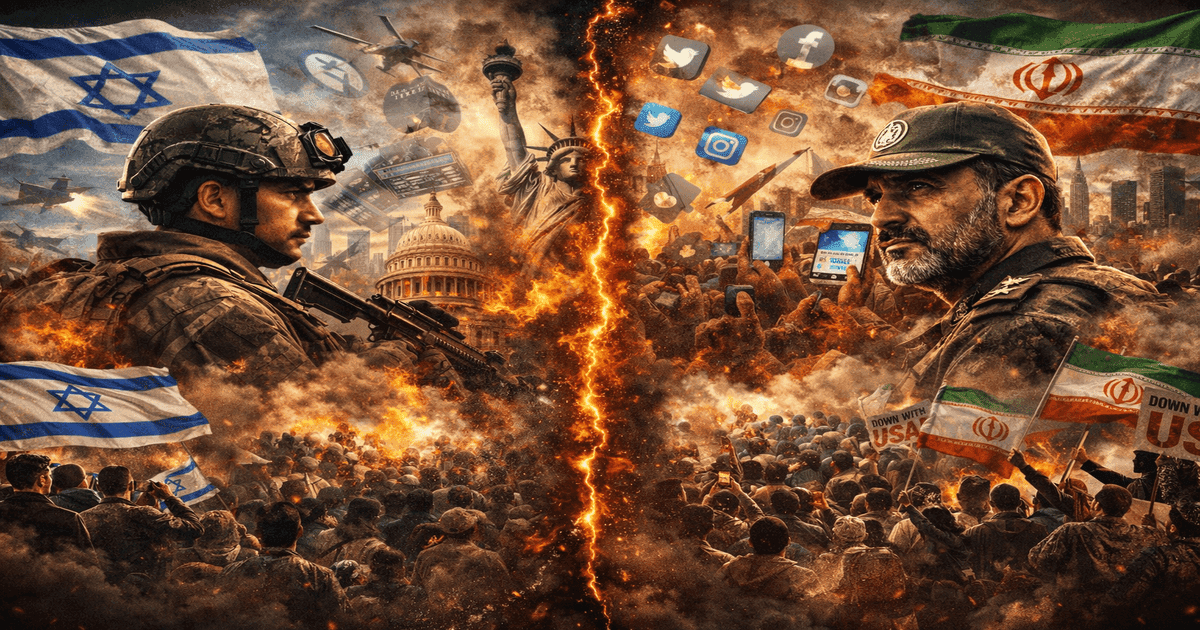
Wars today are fought as much in headlines as on battlefields. The ongoing US–Iran–Israel conflict is a textbook example of how narrative, perception, and media framing can shape global opinion as powerfully as missiles and airstrikes. For PR agencies in Delhi NCR, this is also a reminder that in the digital age, controlling the narrative often becomes as critical as controlling the event itself.
So, who is actually winning the PR war?
The answer is not straightforward. Each side is dominating a different audience, with very different messaging strategies.
From day one, the US and Israel positioned their military campaign as a pre-emptive strike against an imminent threat. The messaging has been clear, this is about security, not aggression. The scale and precision of the initial strikes, nearly 900 in the first 12 hours, targeting Iran’s military and leadership, were projected as evidence of operational superiority.
Israel has gone a step further in its messaging. Its foreign minister has already claimed that the country has “won” the war, framing the conflict as a strategic success even while hostilities continue. This is classic perception management. Declare momentum early, shape global opinion before the facts settle.
At the same time, Israeli and US communication has leaned heavily on the elimination of key Iranian figures and infrastructure. These are high-visibility wins that translate well into media narratives.
However, cracks are beginning to show.
A senior US counterterrorism official publicly resigned, stating that Iran posed no immediate threat and questioning the justification for the war. From a PR standpoint, this is damaging. Internal dissent weakens narrative cohesion, especially in democratic systems where credibility is tied to transparency.
Iran’s communication strategy has taken a very different route. Instead of projecting strength through dominance, it has focused on victimhood, sovereignty, and resistance. Iranian officials have called the strikes “illegal” and “unprovoked”, positioning themselves as defenders rather than aggressors.
This messaging resonates strongly across large parts of the Global South, and even within segments of Western public opinion that are wary of US military interventions. Despite significant losses, including the killing of top leadership figures, Iran has managed to maintain a crucial perception, it is still standing.
In fact, intelligence assessments suggest that rather than collapsing, Iran’s regime has consolidated power, with hardline elements tightening control internally. From a PR lens, this is a quiet but important win. Survival itself becomes a narrative of strength.
Iran has also leveraged asymmetry effectively. Missile retaliation, disruption of oil routes, and regional escalation create a perception that it cannot be easily subdued. This challenges the US–Israel narrative of quick victory.
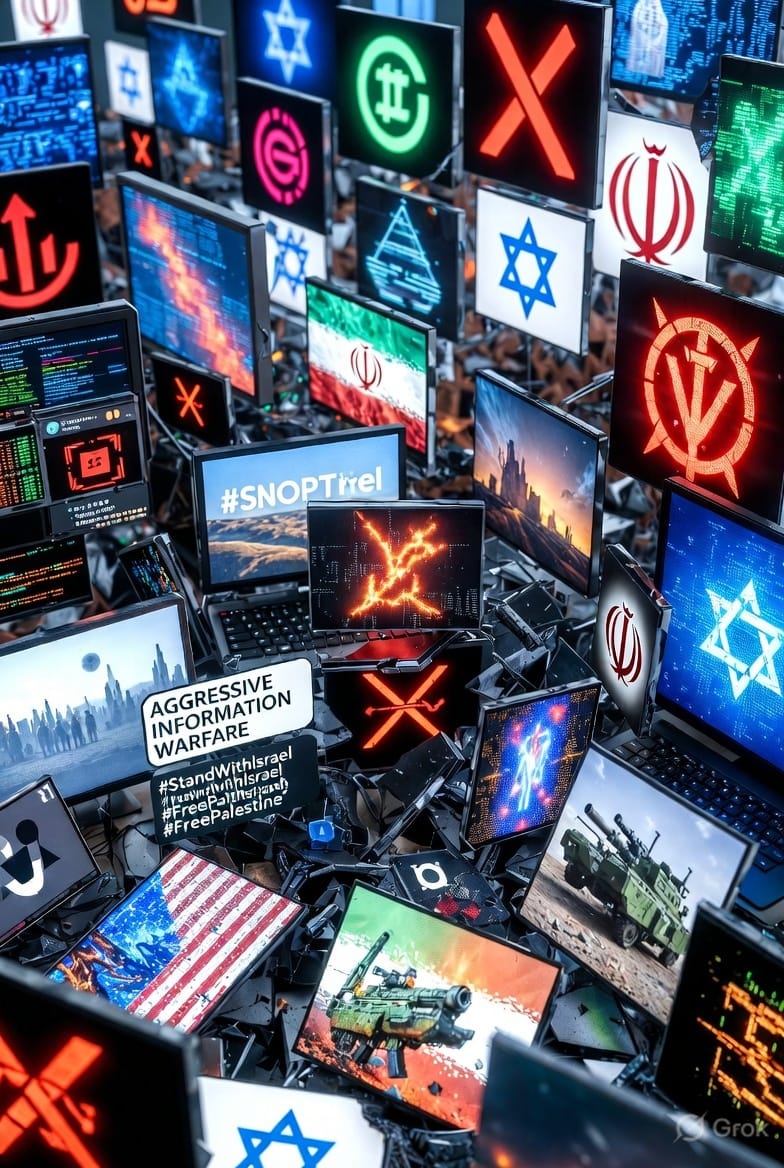
The real PR war, however, is unfolding online. All sides are engaged in aggressive information warfare, from cyber operations to social media amplification. The result is not a single dominant narrative, but multiple parallel realities.
In Western mainstream media, the US–Israel framing still holds considerable ground. But on social platforms, particularly outside the West, pro-Iran and anti-intervention narratives are gaining traction. Studies of conflict communication show that these informational battles often matter as much as the military ones, because they determine how long public support can be sustained. There is also a darker dimension. The war has triggered a surge in disinformation, conspiracy narratives, and hate speech online, further polarising audiences and making objective reporting increasingly difficult.
Perhaps the most telling indicator of the PR war is the global response. US allies have shown hesitation in fully backing the conflict, with several questioning both the strategy and the communication around it.
At the same time, Iran has managed to position itself as a symbol of resistance against Western intervention, gaining rhetorical support in parts of Asia, Africa, and Latin America.
This divide reflects a broader shift in global media power. Narratives are no longer controlled by a handful of Western outlets. Digital platforms have decentralised influence, making the PR war far more contested.
If measured in traditional media dominance and military storytelling, the US and Israel still hold the upper hand. But if the metric is global sentiment, narrative resilience, and digital influence, Iran is performing far better than expected. In reality, this is not a war with a single PR winner. It is a fragmented battle of narratives, where each side is winning its own audience, and losing another. And that is what makes this conflict particularly dangerous. Because when everyone believes they are winning the story, the war itself becomes harder to end.











Leave A Reply Now