
When Airbnb launched in 2008, it faced an existential crisis that money alone couldn’t solve: the trust deficit. The business model required total strangers to sleep in unknown homes, a concept entirely alien to global travellers at that time.
While traditional corporate playbooks rely heavily on multi-million dollar ad spends, Airbnb’s rise was fueled by a masterclass in strategic Public Relations and earned media. By shifting public perception from “dangerous” to “desirable,” PR became the startup’s ultimate growth engine.
For corporate brands and high-growth firms in Delhi/NCR, the Airbnb trajectory offers a definitive blueprint: earned narrative drives exponential business valuation.
In its infancy, Airbnb was rejected by major Silicon Valley venture capitalists. Facing massive credit card debt, the founders used a creative PR stunt during the 2008 U.S. Presidential Election to keep the company afloat. They designed and manufactured, limited-edition cereal boxes: “Obama O’s” and “Cap’n McCain’s.”
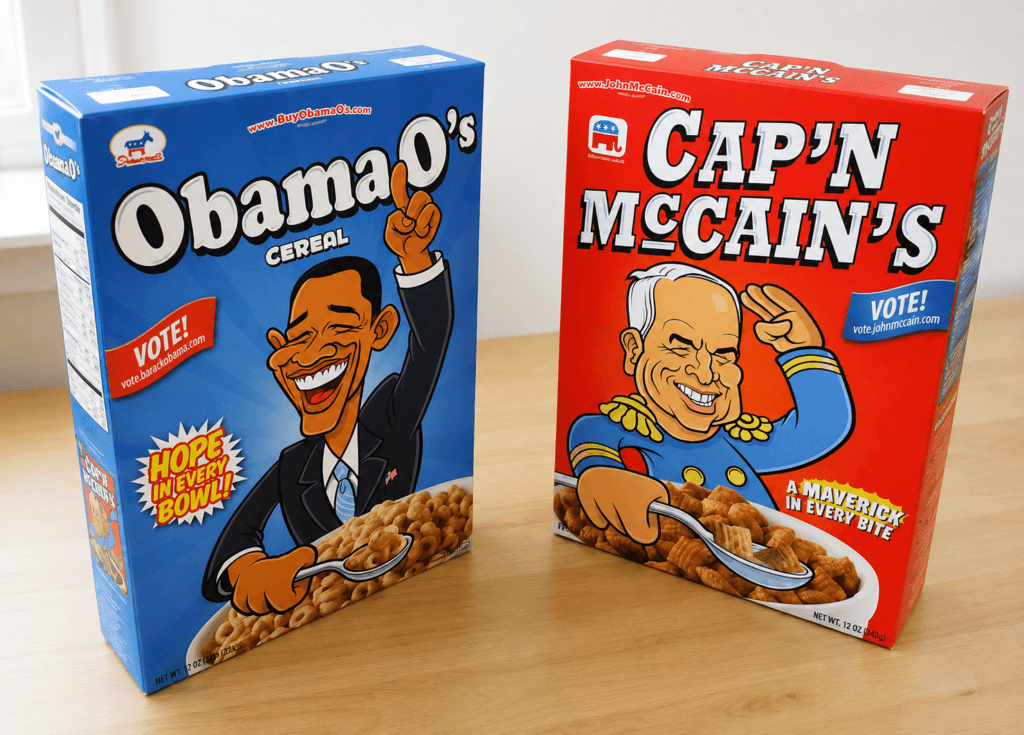
Instead of buying advertising, they pitched these quirky boxes to high-profile political and tech journalists. The narrative instantly caught fire, securing earned media placements across national broadcasts and print outlets.
The stunt generated $30,000 in immediate cash, but more importantly, it introduced the concept of “AirBed & Breakfast” to millions of potential hosts and guests entirely through earned media coverage, bypassing a nonexistent marketing budget.
To disrupt established giants in the hospitality sector, Airbnb used PR to establish a brand identity centred around community and belonging rather than just cheap accommodation. It moved the conversation away from standard hotel rooms toward localised experiences.
Academic evaluations of corporate reputation underscore that corporate communication strategies must balance controlled and uncontrolled media to build long-term trust. Airbnb did this by running data-backed PR campaigns that shared real stories of hosts using the platform to pay their mortgages, shifting the narrative from a tech utility to an economic empowerment engine.
As a platform operating at massive scales, Airbnb inevitably faced intense reputational crises, ranging from unauthorised house parties to surreptitious listings and customer service failures.
Rather than executing passive damage control, Airbnb’s PR apparatus weaponised radical transparency. When safety issues emerged, leadership proactively introduced a “Guest Guarantee,” standardised house rules, and integrated strict verification systems. They pitched these updates directly to top-tier media outlets, shifting the public conversation from structural vulnerabilities to operational accountability.













Leave A Reply Now