
Every founder asks it sooner or later: “Can PR make us go viral?”
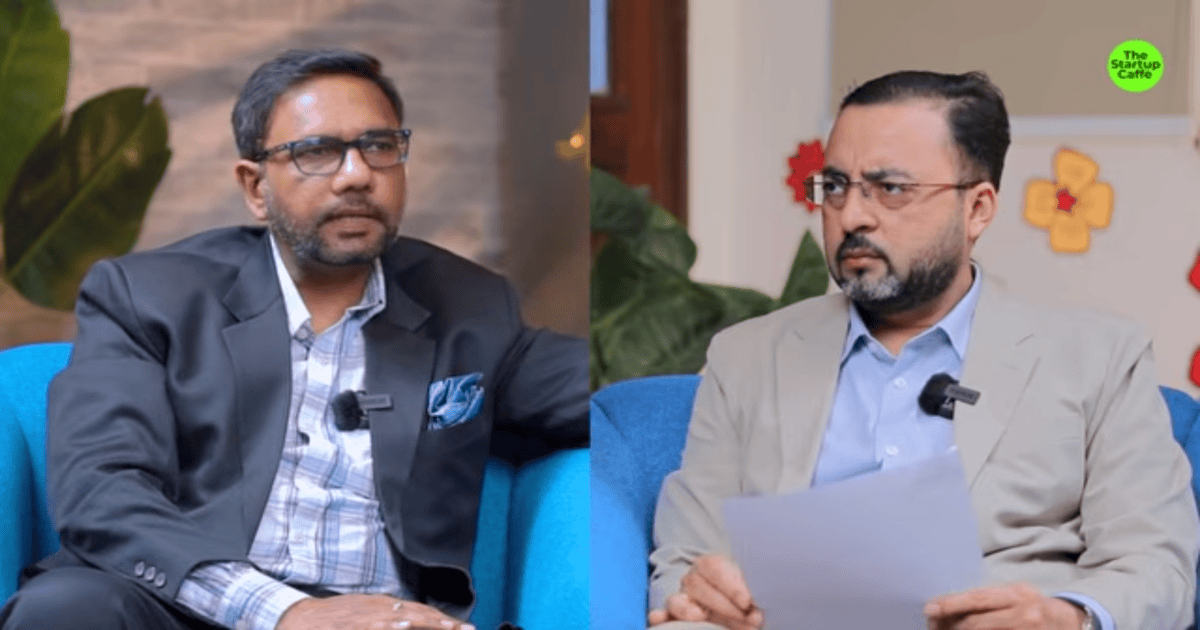
Our founder, Romit Vincent Singh, took that exact question to The Startup Caffe podcast, where host Sriwant Wariz sat down with him for a candid conversation. The honest answer: nobody can promise viral. But PR for startups can do something more durable. It can make strangers trust a company before they ever speak to it. Here are the main ideas from the episode, backed by research you can check yourself.
Watch the full episode: Can PR Make Your Startup Go Viral?
Romit did not begin in PR. He began in news at Sahara India’s news channel, then completed a master’s in journalism and communications at Cardiff University in the UK. Roles at Singapore-based Televisory and S&P Global followed, before he moved into public relations.
That path shapes how our team works. A journalist’s daily job is to ask one blunt question: why would anyone care? Most founders skip it. They have a product, a funding round and a launch date, and they assume the world is waiting. It isn’t. On the podcast, Romit explained how journalistic thinking helps brands find the stories that reporters and audiences respond to.
This was one of the episode’s clearest messages. Marketing usually pays for attention: ads, sponsored posts, boosted reels. You control the message and the placement because you bought both.
PR works the other way round. You pitch a story, and a journalist decides if it deserves space. As one PR firm explains, earned media never comes with a guarantee, and the story must be relevant and newsworthy before anyone runs it. That uncertainty is the price of credibility. Mailchimp’s guide notes that earned coverage is trusted more because the public knows nobody paid for it.
So when a company invests in PR for startups, a press mention should not be treated as a cheaper ad. It is a vote of confidence from a third party. The fee pays for finding the story and pitching it well, not for the headline.
That is the line Romit wants every founder to remember from the episode.
A young company has no brand history, no famous logo and no crowd of loyal customers. What it does have is a founder with a reason for building the thing. Romit urged founders to share that reason: why they started, what problem they saw, and the human story behind the business. Human stories travel. Feature lists don’t.
The research points the same way. Edelman’s 2026 Trust Barometer surveyed 33,938 adults in 28 countries and found that, as fear rises, trust is becoming more localised. India also faces a gap abroad: it ranks only 13th when people in other countries are asked how much they trust Indian-headquartered companies. For an Indian startup with global ambitions, a visible founder gives people someone to trust while the brand is still unknown.
Business buyers behave the same way. An Edelman and LinkedIn study found that 73% of decision-makers see an organisation’s thought leadership as a more trustworthy basis for judging it than its marketing materials. The same research found that 86% are likely to invite consistent producers of quality thought leadership into an RFP.
Journalists receive a steady flood of pitches. A funding announcement is a one-line brief. But imagine a founder who left a stable job to fix a problem their own family faced. That is a feature.
The conversation covered why emotional and human-interest angles have a better chance of getting noticed. It also covered the uncomfortable part: there is no formula for going viral. Anyone selling one is guessing.
What a company can control is its core narrative, a clear answer to “who are we, what do we stand for, and why does it matter?” Romit stressed settling that before approaching a single journalist. Otherwise, every pitch sounds different, and none of them stick.

The episode also looked at the future of digital PR. Discovery is moving from ten blue links to one AI-written answer, and those tools read the news. Muck Rack’s first What Is AI Reading? study found that more than 95% of links cited by AI came from unpaid sources. Its May 2026 edition found that earned media drives 84% of citations across ChatGPT, Claude and Gemini. One newsletter pointed out the research leans toward US sources, so the exact numbers are best read as a direction, not a promise.
The direction is still clear. If no credible outlet writes about a startup, an AI assistant has little to say about it. Coverage in respected publications is now a visibility asset for both Google and AI answers.
Romit closed the conversation with three habits for young PR professionals: be consistent, learn from failure and stay sincere with clients. Pitches will be ignored and stories will be killed. Keep going, and be honest with clients about what PR can and cannot do.
PR for startups works when the founder, the story and the timing line up. If you want help finding yours, explore our PR consultancy services in Delhi or get in touch with Romit PR.
 Optimized by Seraphinite Accelerator










Leave A Reply Now